
OEM hand tools are tools manufactured for a buyer’s brand or agreed specifications. In supplier discussions, the term can cover anything from branding an existing tool to producing a buyer-defined design. Confirm the actual work involved rather than relying on the label. For an importer launching a new range, the next challenge is making the first order ready to receive, list, sell, and support.
A production order can meet its factory completion date and still miss the commercial launch. An unresolved packaging version, an incorrect item record, or an unassigned approval can prevent otherwise finished goods from moving forward. This guide explains how to connect pilot production with launch decisions for wholesale and private-label hand-tool programs.
The workflow below is an editorial planning framework, not a universal manufacturing standard or a report of a completed Nexus ToolPal customer project. Adapt its checkpoints to the product, destination market, and sales channel.
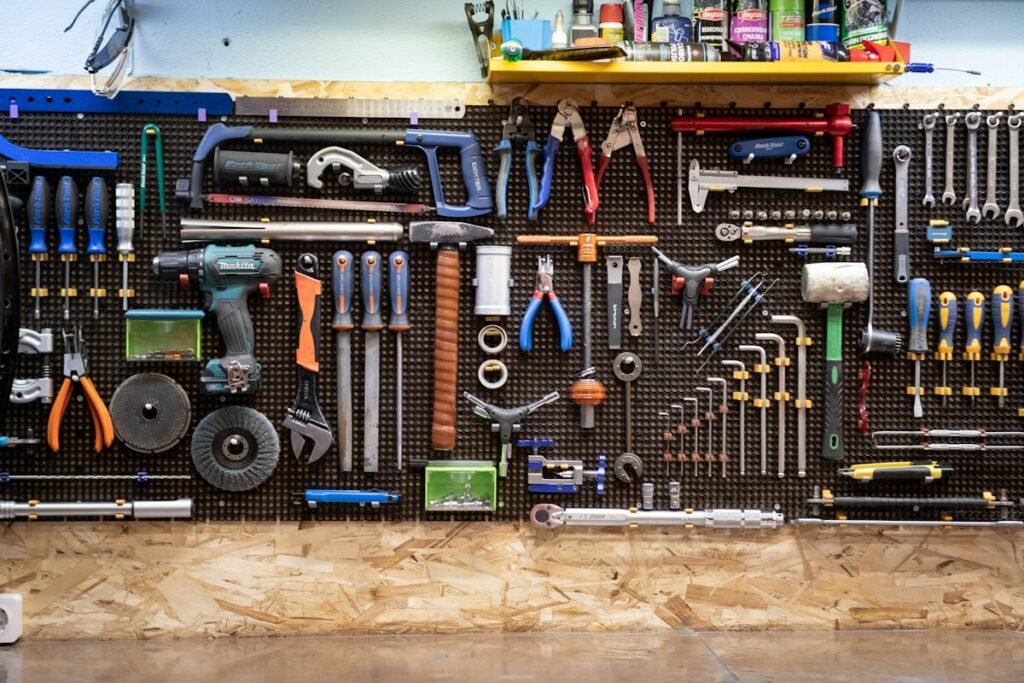
Photo: Anton Savinov on Unsplash. Illustrative workshop photograph, not a Nexus ToolPal factory or production-batch image.
Define the OEM hand tools project before setting a launch date
Separate the product platform from the changes you are commissioning. A standard wrench with a new marking, a socket assortment in a custom case, and a newly engineered ratchet mechanism create different dependencies. Document which elements already exist, which need approval, and which require new validation.
For terminology and sourcing-model comparisons, see our OEM vs ODM hand tools guide. Here, the focus is the point at which a defined project moves from an acceptable sample to an order your business can actually launch.
| Project scope | Launch dependency to resolve | Evidence of readiness |
|---|---|---|
| Existing tool with buyer branding | Marking approval and consistent product identity | Approved marking file and matching finished sample |
| Existing tools in a new assortment | Component availability, case fit and exact contents | Controlled bill of materials and complete packed sample |
| Modified product or new design | Engineering validation and production feasibility | Released specification and applicable validation records |
| Multiple products under one brand | Different suppliers or workstreams reaching completion together | An item-level readiness list with named owners |
Treat each row as a different planning problem. A shared brand color does not make every product in the range equally ready for production.
Use a pilot order to answer specific questions
A pilot order is a limited production run intended to examine whether the proposed production and packing process can deliver the agreed product. It is not simply a smaller commercial order, and its quantity should follow the questions being tested. Availability and commercial feasibility must be agreed with the supplier.
Define the purpose before requesting a quantity: are you checking a new handle assembly, consistency of markings across several sizes, mixed-set packing, or receipt at your own warehouse? A hand-finished demonstration sample cannot answer every question about repeatable production.
Ask whether the pilot uses the intended materials, equipment, subcontracted processes, assembly steps, and packaging. Record any differences. If production quantities will require a different process, the pilot result should not be treated as complete evidence for that later configuration.
| Pilot question | What to observe | What a favorable result does not prove |
|---|---|---|
| Can the set be packed correctly? | Actual contents, item identification and packing checks | Every future set will be complete |
| Does the case fit the approved tools? | Retention, removal, closure and dimensional consistency | Transport performance under all shipping conditions |
| Can the product be received correctly? | Item records, pack quantities and label matching | Acceptance by every retailer or warehouse |
| Can the product be listed accurately? | Images and descriptions compared with the packed goods | Market demand or future sales |
| Can a claim be investigated? | Batch reference, retained records and response ownership | A universal warranty or replacement lead time |
Pilot findings should produce a written action list. Each issue needs an owner, a correction, and evidence that the correction works. A second sample is useful only when its identity and relationship to the affected process are clear.
Separate three release decisions
1. Production release
This authorizes the agreed manufacturing scope. It should reference the product specification, assortment list, markings, and relevant validation. A product approval should not silently authorize an unfinished packaging design or a different component. For detailed sample controls, use our golden sample approval checklist.
2. Shipment release
This determines whether the identified goods can leave under the agreed conditions. Review the applicable inspection results, open issues, packing information, quantity reconciliation, and shipping documents. The decision should state which order and batch it covers.
3. Commercial launch release
This confirms that your business can sell and support the product in the planned channel. It includes correct product records, final images, approved claims, pricing, stock receipt arrangements, and a customer-support route. Shipment approval does not automatically complete these tasks.
For each decision, choose one status: approved, held, or approved with a precisely documented limited scope. Avoid an ambiguous “looks fine” message that leaves the factory, purchasing team, and sales team with different interpretations.
Assign approval responsibility before a deadline becomes urgent
The following is a suggested responsibility map. A small company may have one person in several roles, but the decisions still need to be explicit. Confirm the actual allocation with your suppliers and internal team.
| Workstream | Suggested accountable owner | Concrete deliverable |
|---|---|---|
| Product configuration | Buyer product or sourcing lead | Released specification and contents list |
| Manufacturing and assembly | Supplier production lead | Production plan and records for the agreed configuration |
| Inspection and issue closure | Designated quality reviewer | Inspection decision and closed action list |
| Branding and packaging | Buyer brand or packaging lead | Approved artwork with revision reference |
| Product data and channel setup | Buyer sales or ecommerce lead | Verified item record, images and listing |
| Receipt and fulfillment | Buyer logistics lead | Confirmed pack quantities and receiving instructions |
| Customer claims | Buyer support lead with supplier contact | Documented investigation and replacement process |
Clarify who may approve deviations. A salesperson agreeing to a ship date should not be interpreted as technical acceptance of a changed tool or unfinished evidence. Give each owner a response deadline and an escalation contact.
Make the physical product and its digital record agree
Before launch, compare a final packed unit with the item record your customer will see. Check the brand, model, size system, included contents, dimensions, weight, case format, and stated limitations. Use the final configuration for photography; an early sample can show a tool or accessory that never reaches the shipment.
Keep supplier item codes, your internal SKU, and any assigned GTIN in distinct fields. GS1 US explains that a GTIN identifies a trade item. A useful operational check is to scan the final label and confirm that the receiving or listing system resolves it to the intended product and packaging level.
For buyers selling through Google Shopping, the Google Merchant Center GTIN guidance says to use correct identifiers and not invent or guess a GTIN. Its guidance also addresses private-label products without an assigned GTIN. Check the applicable channel rules before artwork is printed; the absence of a GTIN should be a resolved data decision, not a last-minute placeholder.
A barcode scanning successfully does not by itself prove print quality meets a trading partner’s requirements. Confirm any verification requirements with the receiving channel. Likewise, making a product record complete does not establish the product’s technical compliance. These are separate checks.
Build the schedule around dependencies, not one lead-time number
Start with the date the goods must be available to the customer. Work backward through receipt, transport, shipment release, production, component availability, and approvals. Include the buyer’s own response time and the possibility of corrective work.
Record the start condition for each supplier lead-time estimate. “Production takes six weeks” is incomplete if the clock starts only after final artwork, component confirmation, and payment conditions have all been met. Ask which tasks can run concurrently and which must wait.
For a mixed tool set, a missing component can affect the whole finished assortment. Identify the limiting component and decide in advance whether a reduced assortment would be a separately approved product or whether the complete launch must wait. Do not change contents while keeping an outdated package description.
There is no universal 30-, 60-, or 90-day launch promise for OEM hand tools. Ask for a project-specific schedule showing assumptions, dependencies, and who owns each approval.
A worked example: ready tools, unfinished launch
Consider a hypothetical distributor introducing a metric socket set under its own brand. The tools match the approved specification, but the pilot packed units reveal three discrepancies: an obsolete contents image, a carton record showing the wrong pack quantity, and a label linked to a previous assortment. These are illustrative issues, not measured defect data.
| Finding | Appropriate next action | Release implication |
|---|---|---|
| Package image shows an excluded accessory | Correct and approve the artwork; confirm affected packaging is identified | Hold packing with the incorrect artwork |
| Carton record uses an old quantity | Reconcile the actual pack and receiving record | Hold shipment documentation until reconciled |
| Label maps to a previous assortment | Review product identity and correct the label and data through the applicable process | Hold use of the mismatched identifier |
The professional response is to identify which work can continue and which must stop. Conforming tool production may remain usable if it has been properly authorized, while incorrect packaging or product data stays on hold. This avoids both an unnecessary full restart and an unsupported decision to ship everything unchanged.
Prepare a one-page launch decision record
Use a shared record containing the order reference, item codes, product and packaging revisions, pilot scope, open issues, owners, evidence links, and the three release statuses. Add the planned receiving date and the next review date.
Keep observations separate from decisions. “Case latch revised” is an observation. “Revised case accepted for this configuration after the agreed checks” is a decision that needs an approver and supporting evidence.
After arrival, reconcile receipt discrepancies and early customer feedback against the batch and approved configuration. Feed confirmed changes into the next order through supplier change control; do not let an email correction become an undocumented new specification.
Frequently asked questions about OEM hand tools
Do OEM hand tools always require new molds?
No. Branding an existing product may use existing tooling, while a new component or design may require investment. Ask the supplier to identify the required changes and quote tooling or setup separately.
Is a pilot order mandatory for every project?
Not universally. Its value depends on the product changes, process uncertainty, and buyer or channel requirements. Decide what needs validation and how to obtain that evidence; a pilot is one possible method.
What is the right pilot quantity?
There is no single number that suits every project. Define the tests, configurations, process coverage, and retained samples needed, then agree on a feasible run. A small pilot cannot establish a precise long-term defect rate by itself.
Can packaging be finalized after tool production starts?
Some activities may run concurrently, but only after dependencies are understood. A new case can affect tool fit, and an assortment change can affect the contents label. Authorize the specific work that is ready and keep unresolved elements controlled.
What should I send Nexus ToolPal to begin?
Send the intended products, target users and market, quantity by configuration, existing drawings or samples, customization requirements, sales channel, and desired availability date. Include any retailer packaging or data requirements you already have.
Turn OEM hand tools into a launch-ready product range
A useful first-order plan connects production evidence, physical packaging, product data, receiving arrangements, and customer support. Explore Nexus ToolPal’s OEM and ODM services or send your project brief for a scope-specific discussion. With clear owners and documented release decisions, buyers can approach OEM hand tools as a coordinated product launch rather than a shipment date alone.