
Power tools use an external energy source to perform work that would otherwise depend on manual effort. In workshop and hardware catalogs, the term usually refers to electric tools, including corded and battery-powered equipment. Understanding the category means looking beyond the tool body to its motor, energy supply, controls and supporting system.
Three themes help explain today’s product landscape: cordless platforms, brushless motors and battery technology. This guide connects those themes to the language found in product specifications. It is a category overview for readers of the Nexus ToolPal blog, with manufacturer sources and clear limits on what a headline specification can establish.
Power Tools at a Glance
| Topic | What it describes | What it does not establish |
|---|---|---|
| Corded or cordless | How electrical energy reaches the tool | A universal ranking of performance or quality. |
| Brushless motor | Electronic commutation without carbon brushes | That every component is maintenance-free. |
| Battery platform | A documented family of compatible tools, packs and chargers | Compatibility with every battery of the same voltage. |
| Voltage | An electrical characteristic of the supply system | Real-world output or runtime by itself. |
| Battery capacity | Stored charge, usually expressed in amp-hours | An identical number of working minutes across different tools. |
| Performance claim | A result under specified conditions | A fair comparison when the test conditions differ. |
What Types of Power Tools Are There?
Product catalogs group power tools into families such as drilling and fastening, material cutting, surface finishing and specialist workshop equipment. These are category descriptions rather than interchangeable capabilities. Individual models have specific design limits and manufacturer instructions.
Power source provides a second classification. Corded electric tools receive power through a cable, while cordless electric tools use rechargeable batteries. Pneumatic equipment relies on compressed air and is often listed separately. This article focuses on the electric category.
Hand tools remain a distinct, complementary category: they depend primarily on manual force and do not require a motor or a battery system. For related terminology, the Nexus ToolPal ratcheting wrench set guide explains why a manual ratcheting wrench differs from a powered ratchet.
Cordless vs Corded Power Tools
Cordless power tools separate the tool from a mains cable, making mobility a defining feature. Their performance depends on the combination of tool, battery and electronic controls. Battery state, temperature and workload can all affect the results described in a runtime claim.
Corded designs do not depend on a removable battery’s charge, but still have operating limits. A mains connection does not imply unlimited continuous operation, just as a cordless design does not automatically imply lower performance. The meaningful comparison is between specific models under equivalent conditions.
| Characteristic | Corded designs | Cordless designs |
|---|---|---|
| Energy source | Mains electricity through a cable | Rechargeable battery pack |
| System dependencies | Rated electrical supply and tool design | Tool, compatible pack, charger and controls |
| Mobility | Constrained by the cable and available supply | Independent of a mains cable during operation |
| Specification context | Input ratings and documented output | Platform, battery configuration and documented output |
| Long-term support | Service arrangements and replacement parts | Service arrangements, parts and battery-system continuity |
What Does Brushless Mean in Power Tools?
A brushed motor transfers current through carbon brushes and a commutator. A brushless motor uses electronic control to coordinate current in its windings. Makita’s brushless motor explanation describes this distinction and the removal of the carbon-brush replacement requirement.
Eliminating brush contact can improve motor efficiency and remove one source of wear. However, the complete tool still contains bearings, transmission components, switches and electronics. “Brushless” describes a motor architecture; it is not evidence that the entire tool cannot wear out or fail.
Nor does the label establish a fixed runtime improvement. A percentage claim needs a named comparison model and test conditions. Tool size, motor control, battery configuration and load can change the result. A useful technical explanation keeps the design benefit separate from model-specific performance.
Why Battery Platforms Matter
A cordless platform is a system relationship, not simply a voltage label. Compatibility includes the physical interface, electrical characteristics and the manufacturer’s supported combinations. Similar-looking packs or matching numbers on their labels do not establish interchangeability.
Cross-brand systems make this especially relevant. AMPShare is a documented alliance that supports compatible products across participating brands. Its existence demonstrates a platform approach; it does not mean all cordless products, or every product from a participating brand, belong to the same system.
For people reading catalogs or maintaining product data, the practical distinction is between a brand, a platform and an individual model. Those should be separate fields. “Brand X battery” is less precise than an exact platform name and a documented compatibility statement.
Power Tools Industry Themes Relevant in 2026
Current manufacturer material points to developments in battery systems and the relationship between tool electronics and energy delivery. These are documented product themes, not measurements of Google search-volume growth.
1. Platform continuity alongside new products
Bosch’s September 2025 Expert announcement described an initial wave of tools and measuring devices planned for January 2026, alongside compatibility with its Professional 18V and AMPShare systems. The relevant theme is that a new product range can develop within an existing platform rather than requiring a completely separate battery family.
2. Battery design beyond the amp-hour number
Bosch’s Expert 18V battery announcement discusses tabless cell technology and thermal management. This illustrates why battery capacity alone does not describe all aspects of energy delivery. Cell design, pack construction and controls can matter alongside the capacity printed on the label.
3. More attention to the complete system
The combination of platform compatibility and battery development suggests a broader way to understand cordless equipment: the motor is only one part of the performance chain. This is an editorial interpretation of the cited manufacturer information, not an independent market-share finding or a forecast that corded equipment will disappear.
How to Read Power Tool Specifications Without Overinterpreting Them
A specification becomes useful when its meaning and measurement conditions are clear. Several common entries describe different things and should not be treated as substitute measures of “power.”
| Specification | Meaning | Important limitation |
|---|---|---|
| Voltage (V) | Electrical potential associated with the supply | Nominal and maximum labels are not necessarily the same measurement basis. |
| Amp-hours (Ah) | Battery charge capacity | Runtime also depends on demand, efficiency and conditions. |
| Watt-hours (Wh) | A measure of stored energy | Stored energy is different from the rate of power delivery. |
| Watts (W) | A rate of energy transfer | Electrical input, mechanical output and temporary peak output differ. |
| No-load speed | Speed measured without a working load | It does not establish speed or productivity under load. |
| Weight | Mass of the listed configuration | Body-only and battery-equipped figures describe different configurations. |
A hypothetical 18 V nominal, 5 Ah pack corresponds to approximately 90 Wh using nominal voltage multiplied by amp-hour capacity. That arithmetic explains the units; it does not predict a particular tool’s runtime or establish battery compatibility. The pack’s documented rating remains the reference.
Clear technical writing also distinguishes a manufacturer’s claim from a measured independent result. If test conditions are missing, it is better to describe the number as incomplete than to turn it into a confident comparison.
What Makes a Power Tools Article Trustworthy?
Useful category content identifies its scope, names its sources and explains uncertainty. A specification guide should not present itself as a hands-on review unless the described testing actually took place. Likewise, a technology overview should not imply that the publisher stocks or manufactures every product discussed.
This distinction is relevant to Nexus ToolPal’s focus on hand tools. The About Us page explains the business, while the blog provides related tool knowledge. This article adds context about powered equipment without making a claim of affiliation with the cited brands or availability of their products.
Frequently Asked Questions About Power Tools
Are all power tools electric?
No. The wider category can include tools driven by compressed air or other external energy sources. In many workshop catalogs, electric corded and cordless equipment forms the main grouping.
Are cordless and brushless the same thing?
No. Cordless describes the power supply arrangement, while brushless describes the motor. They refer to different parts of the design.
Does a larger Ah rating mean more powerful equipment?
Not by itself. Amp-hours describe charge capacity. Output depends on the full system, including the battery’s energy-delivery characteristics, controls and tool design.
Are batteries with the same voltage interchangeable?
No. Voltage alone does not establish compatibility. The relevant reference is the manufacturer’s documented tool, battery and charger system.
Does brushless mean maintenance-free?
No. There are no carbon brushes to replace in that motor design, but other mechanical and electronic components remain subject to wear or failure.
Sources reviewed September 14, 2026. This article is an educational technology overview, not an operating manual or hands-on product test. Manufacturer references describe their own systems and do not establish specifications for Nexus ToolPal products.
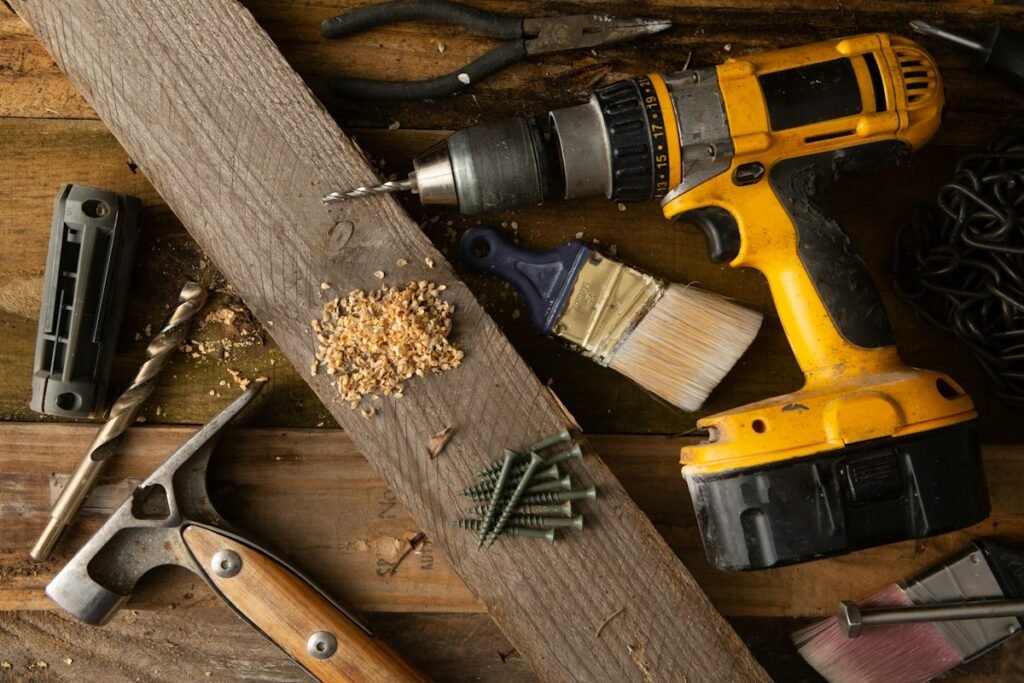
Featured photo: cordless drill and hand tools on a workbench, by benjamin lehman via Unsplash. Stock imagery is illustrative.
Understanding Power Tools as Complete Systems
Modern power tools are best understood through the relationship between their power source, motor, controls and documented capabilities. Cordless platforms and battery developments are important parts of that picture, while clear specifications keep technology claims in perspective. Explore more Nexus ToolPal tool guides for practical explanations of tool categories and terminology, including how hand tools and power tools differ.